ordine (moq):
1
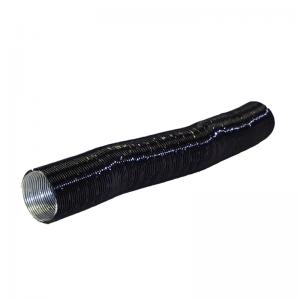
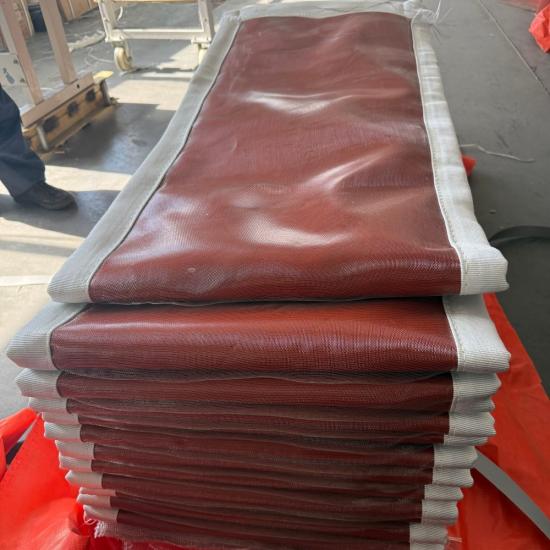
Giunto di dilatazione in tessuto non metallico BSTFLEXSi tratta di un connettore flessibile progettato su misura per condotti industriali, sistemi di aria calda, aspirazione e scarico dei fumi, dove è necessario compensare la dilatazione termica, le vibrazioni, i movimenti delle apparecchiature o i disallineamenti di installazione senza trasferire carichi eccessivi ai condotti e alle apparecchiature adiacenti.
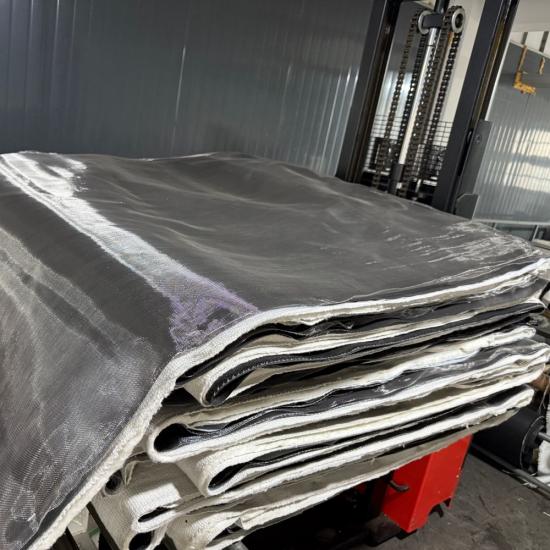
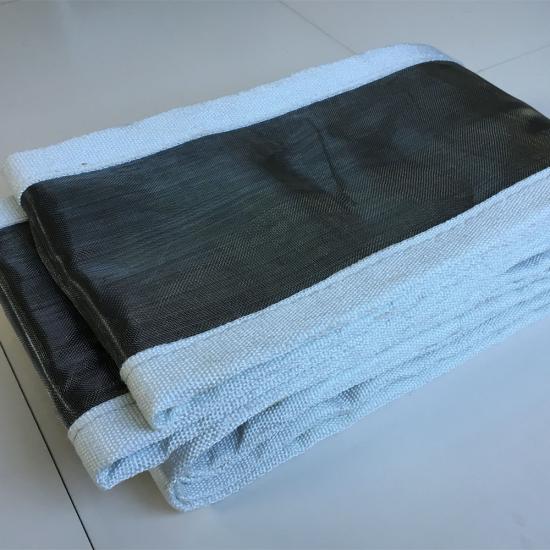
A differenza dei componenti metallici rigidi, ungiunto di dilatazione del tessutoUtilizza uno o più strati flessibili di tessuto, tessuto spalmato, guarnizioni e isolamento, selezionati in base alla temperatura di esercizio, alla composizione del gas, alle condizioni di pressione, ai requisiti di movimento e all'ambiente circostante. L'elemento flessibile può adattarsi a spostamenti assiali, laterali e angolari, mantenendo al contempo una connessione controllata tra due sezioni di condotto.
BSTFLEX produce forme rotonde, rettangolari, quadrate e specifiche per applicazionigiunti di dilatazione non metalliciPer produttori di apparecchiature OEM, installatori di condotti, sistemi di generazione di energia, cementifici, apparecchiature per la lavorazione dell'acciaio, forni industriali, sistemi di ventilazione e altri impianti di processo ad alta temperatura.
| Prodotto | Giunto di dilatazione in tessuto non metallico |
| Nomi alternativi | Giunto di dilatazione in tessuto, giunto di dilatazione per condotti in tessuto, giunto di dilatazione in tessuto composito, compensatore non metallico |
| Costruzione | Costruzione flessibile monostrato o multistrato |
| Forme | Geometrie rotonde, rettangolari, quadrate e personalizzate |
| Movimento | Movimento assiale, laterale, angolare e combinato |
| Media tipici | Aria calda, gas di scarico, gas di combustione e gas di processo industriale |
| Materiali | Selezionati in base a temperatura, fluidi, esposizione chimica, abrasione e requisiti meccanici |
| Misurare | Realizzato su misura in base al disegno o alle dimensioni di installazione. |
| Applicazione | Condotti industriali, sistemi di aspirazione, forni, caldaie, ventilatori e sistemi di aria di processo. |
UNgiunto di dilatazione in tessuto non metallicoSi tratta di un collegamento flessibile installato tra sezioni di condotti industriali o apparecchiature per compensare i movimenti che altrimenti creerebbero sollecitazioni nel sistema. La dilatazione termica è una delle cause più comuni di movimento, ma anche le vibrazioni, gli spostamenti delle apparecchiature, le tolleranze di fabbricazione e i movimenti strutturali potrebbero richiedere un controllo.
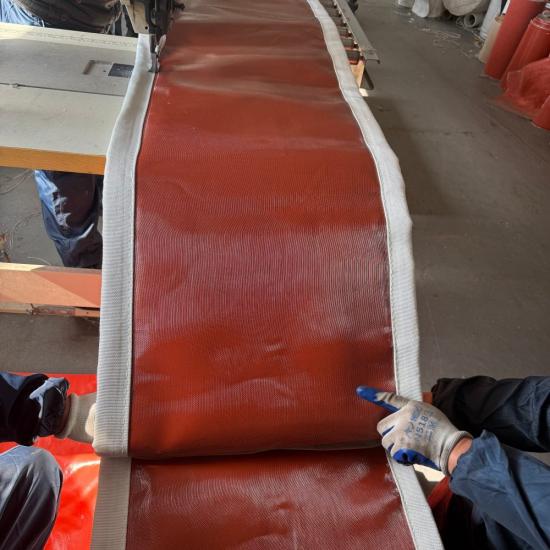
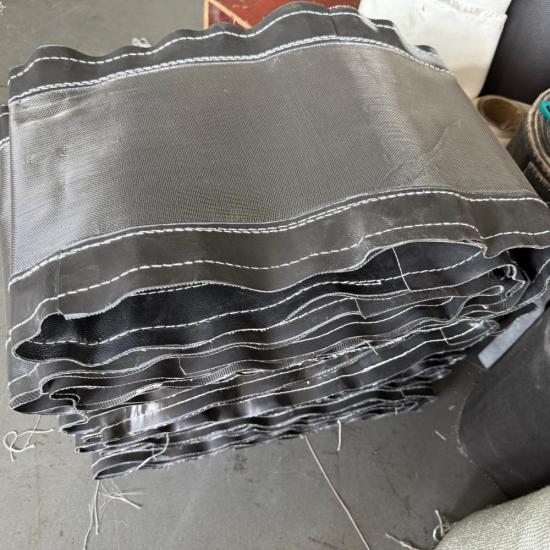
Il corpo flessibile è generalmente realizzato con strati di tessuto tecnico e tessuto spalmato, anziché con un soffietto metallico sagomato. A seconda delle condizioni di esercizio, la struttura può includere una membrana di tenuta ai gas, tessuto di rinforzo, isolamento termico e uno strato protettivo interno.
Questa costruzione fa unagiunto di dilatazione del tessutoParticolarmente adatto per condotti di grandi dimensioni, fluidi gassosi caldi e applicazioni che richiedono movimento in più direzioni.
I sistemi di canalizzazione industriali si espandono e si contraggono al variare della temperatura di esercizio. Se questo movimento viene completamente bloccato, le sollecitazioni termiche possono trasferirsi alle pareti dei condotti, alle flange, alle ventole, ai collegamenti delle apparecchiature e alle strutture di supporto.
Un flessibilegiunto di dilatazione del condotto in tessutoCrea una zona di movimento controllato tra le sezioni adiacenti. Quando il condotto si espande, si contrae o si sposta, la sezione flessibile cambia geometria anziché forzare l'intero spostamento in componenti rigidi.
A seconda della geometria del giunto e della progettazione del sistema, il giunto di dilatazione può ospitare:
Non esiste un'unica struttura in tessuto adatta a ogni giunto di dilatazione industriale. Una progettazione affidabile parte dalle effettive condizioni operative.
Un sistema multistrato può contenere diversi strati funzionali, ognuno dei quali svolge un compito diverso:
Lo strato di tenuta al gas contribuisce a contenere il fluido di processo e viene selezionato in base a temperatura, composizione del gas, umidità, esposizione a sostanze chimiche e condizioni di pressione. A seconda dell'applicazione, si possono prendere in considerazione materiali in fibra di vetro rivestita o a base di fluoropolimeri.
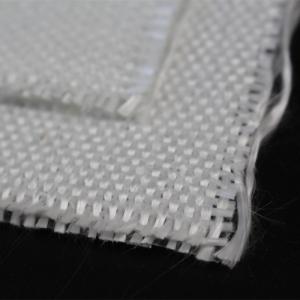
Lo strato di rinforzo fornisce stabilità dimensionale e supporto meccanico all'elemento flessibile. È possibile selezionare tessuti in fibra di vetro e altri tessuti tecnici in base alle proprietà meccaniche e termiche richieste.
I sistemi ad alta temperatura possono richiedere uno strato isolante per ridurre la temperatura che raggiunge i materiali di tenuta esterni. Lo spessore e il materiale dell'isolamento devono essere progettati in base alla temperatura del gas, ai limiti di temperatura esterna e alla geometria del giunto.
Qualora il giunto di dilatazione sia esposto ad elevate velocità del gas, particolato o fluidi abrasivi, potrebbe essere necessario un sistema di protezione interno o un rivestimento di flusso per ridurre l'impatto diretto sull'elemento flessibile.
La selezione dei materiali è una delle parti più importanti delladesign del giunto di dilatazione non metallico. BSTFLEX funziona con una vasta gamma ditessuti ad alta temperaturae tessuti tecnici rivestiti, che consentono di adattare la struttura flessibile a diversi ambienti industriali.
| Tipo di materiale | Funzione tipica | Considerazioni sulla selezione |
|---|---|---|
| Tessuto in fibra di vetro | Reinforcement and thermal-resistant textile layer | Temperature, weight, weave and mechanical strength |
| Silicone Coated Fiberglass | Flexible outer or sealing layer | Temperature, weather resistance, flexibility and environment |
| PTFE Coated Fabric | Gas sealing and chemical-resistant layer | Chemical compatibility, temperature and process media |
| Silica Fabric | High-temperature thermal protection layer | Temperature exposure and insulation requirement |
| Insulation Materials | Reduction of temperature through the joint construction | Operating temperature and required external surface temperature |
| Metal Mesh or Internal Liner | Mechanical or flow protection where required | Gas velocity, abrasion, particles and installation geometry |
For particularly demanding thermal environments, BSTFLEX can evaluate high-silica textile solutions such as96% high temperature silica fabricas part of the overall thermal protection system where technically appropriate.
The final material combination should always be determined from actual application data rather than temperature alone.
Ahigh temperature fabric expansion jointis not defined by one universal maximum temperature. The permissible operating temperature depends on the complete joint construction, including the hot-face protection, insulation package, reinforcement fabric, gas seal membrane, external cover and the temperature distribution through those layers.
For this reason, BSTFLEX evaluates both process temperature and the temperature expected at individual layers of the expansion joint. This approach allows the materials to be selected for their actual operating environment rather than relying on a single generic temperature rating.
When requesting a high-temperature joint, provide the normal operating temperature, maximum or upset temperature, exposure duration and process medium wherever possible.
BSTFLEX manufactures expansion joints according to the shape and dimensions of the customer's ducting system.
Arectangular fabric expansion jointis commonly used on large industrial ductwork, boiler systems, air-handling equipment, furnace connections and flue-gas ducts. Corner geometry, movement distribution and attachment design require particular attention because stress is not distributed in the same way as on a circular joint.
Round and circular fabric expansion joints are suitable for cylindrical duct systems, fan connections, exhaust lines and process-air installations. Diameter, face-to-face length and movement requirements can be manufactured according to the installation.
Non-standard shapes, transitions and asymmetric configurations can be evaluated when standard round or rectangular joints cannot match existing equipment.
Different attachment arrangements can be supplied depending on the duct design and replacement requirements.
Belt-type fabric expansion jointsuse a flexible belt attached to mating metalwork and are suitable for many large industrial duct applications.
Flanged fabric expansion jointscan be manufactured as complete assemblies where the flexible element, insulation components and supporting metalwork are supplied as an integrated unit.
For replacement projects, BSTFLEX can manufacture according to customer drawings, dimensional records or available sample information.
BSTFLEXnon metallic fabric expansion jointscan be engineered for a broad range of hot-air and process-gas ducting systems.
Fabric joints can be used in boiler ducting, flue-gas handling systems, fan connections and other large gas-transport ducts where thermal movement and vibration need to be isolated.
Cement production involves large ductwork exposed to heat, dust and continuous equipment movement. Expansion joints may be used around kiln-related ducting, process-air systems, fans and gas-handling equipment.
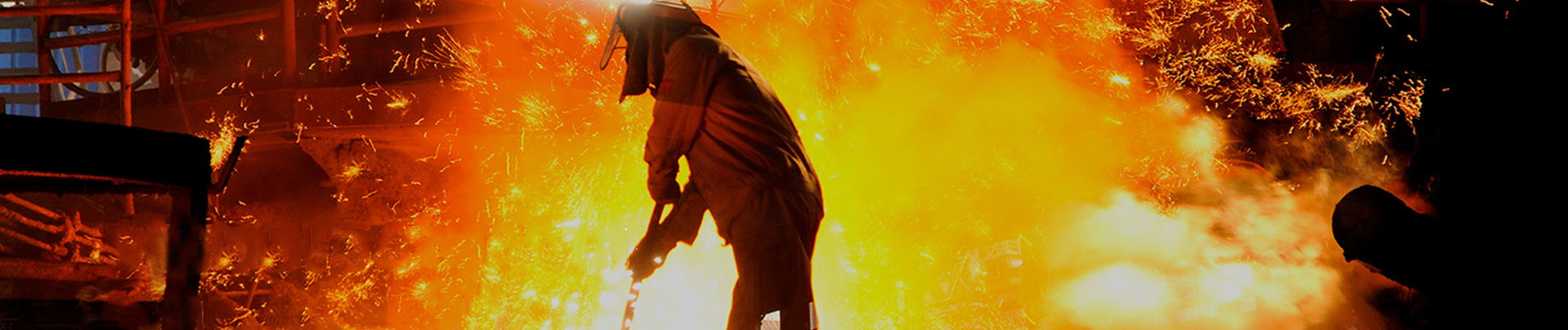
Furnace exhaust, hot-air ducts and process ventilation systems may require flexible connections capable of accommodating thermal growth while operating around demanding high-temperature equipment.
Where process gases contain corrosive constituents, joint materials should be selected according to chemical compatibility as well as temperature.
Fabric joints can compensate for expansion between heated equipment and downstream ductwork while helping isolate movement and vibration.
Flexible expansion joints can reduce the transmission of mechanical vibration between fans, blowers and rigid ducting.
High-temperature exhaust and hot-gas systems often require a flexible transition capable of accommodating repeated thermal cycles and installation movement.
| Design Factor | Fabric Expansion Joint | Metal Expansion Joint |
|---|---|---|
| Flexible Element | Technical fabric or composite textile construction | Formed metallic bellows |
| Typical System | Industrial ducting and gaseous-media systems | Pipe and process systems including higher-pressure service |
| Large Cross Sections | Well suited to large duct dimensions | Possible but design becomes more complex |
| Multidirectional Movement | Can accommodate axial, lateral and angular movement | Depends strongly on bellows configuration |
| Vibration Isolation | Good flexibility for fan and duct connections | Application dependent |
| Material Selection | Composite layers can be selected for thermal and chemical conditions | Determined mainly by metal alloy and bellows design |
The correct choice depends on pressure, temperature, process medium, duct geometry, required movement and applicable engineering standards. Fabric and metallic expansion joints should therefore not be treated as universally interchangeable products.
Selecting an expansion joint only by duct size or maximum temperature is not sufficient. Several operating parameters interact with each other and influence the appropriate construction.
The following information should be evaluated:
Providing this information allows the flexible element and supporting components to be selected around the real service conditions.
For faster engineering evaluation and quotation, send as much of the following information as available:
| Duct Size | Diameter or width × height |
| Joint Shape | Round, rectangular, square or custom |
| Installation Length | Face-to-face dimension |
| Operating Temperature | Normal continuous temperature |
| Maximum Temperature | Maximum or upset temperature and duration |
| Pressure | Normal and design pressure |
| Process Medium | Air, flue gas, exhaust gas or other process gas |
| Axial Movement | Compression and extension |
| Lateral Movement | Required offset movement |
| Angular Movement | Required angular displacement if applicable |
| Environment | Indoor, outdoor, chemical, dusty, wet or abrasive |
| Drawing | PDF, CAD drawing, dimensional sketch or existing joint details |
| Quantity | Prototype, replacement quantity or production requirement |
Industrial expansion joints are frequently project-specific components rather than standard catalogue parts. BSTFLEX supports customized manufacturing according to drawings, dimensional requirements and operating conditions.
Custom options may include:
Because BSTFLEX also works directly with thermal protection textiles and coated high-temperature fabrics, material construction can be evaluated as part of the expansion joint design instead of treating the flexible element as a generic component.
BSTFLEX focuses on engineered thermal protection and technical textile products for industrial applications. Our manufacturing capabilities cover high-temperature woven fabrics, coated fabrics, insulation materials and fabricated thermal components, providing a practical material base for customfabric expansion jointprojects.
A non metallic expansion joint is a flexible connection used primarily in ducting and gaseous-media systems to accommodate thermal expansion, vibration, misalignment and multidirectional movement. Its flexible element is normally manufactured from technical fabrics, coated textiles, insulation and other non-metallic materials selected according to the operating environment.
A fabric expansion joint uses a flexible textile or composite membrane, while a metallic expansion joint normally uses formed metal bellows. Fabric joints are widely used on large industrial ducts and gas-handling systems, while metallic bellows are common in piping and applications where system pressure or process requirements favor metallic construction.
Yes. Properly designed fabric expansion joints can accommodate axial, lateral and angular movement as well as combinations of these movements. The required movements must be provided during design so the joint geometry can be selected correctly.
There is no single temperature rating for every fabric expansion joint. Temperature capability depends on the flexible membrane, insulation package, hot-face protection, sealing material and overall joint construction. BSTFLEX selects the material system according to the normal operating temperature, maximum temperature and exposure conditions.
Depending on the application, materials may include fiberglass fabric, silicone-coated fiberglass, PTFE-coated fabric, silica fabric, insulation materials and metallic protective components. Each layer is selected according to its specific function.
Yes. Fabric expansion joints are widely applicable to industrial flue-gas and hot-gas ducting when the construction is engineered for the process temperature, chemical composition, moisture, pressure, gas velocity and movement requirements.
Yes. BSTFLEX manufactures rectangular, round, square and other custom configurations according to duct dimensions and installation requirements.
In many cases, yes. Dimensional measurements, photographs, operating conditions and information from the existing expansion joint can be used for an initial evaluation. A complete drawing or physical sample provides additional information when available.
The most useful information includes duct dimensions, joint shape, face-to-face length, operating and maximum temperature, pressure, process medium, axial movement, lateral movement, angular movement, gas velocity, chemical exposure, flange arrangement and required quantity. Drawings are strongly recommended where available.
Se state cercando un giunto di dilatazione di ricambio o state progettando un nuovo sistema di canalizzazione industriale, inviate a BSTFLEX il vostro disegno e le condizioni operative. Il nostro team valuterà la forma, le dimensioni, i materiali flessibili, la struttura dell'isolamento e i requisiti di movimento necessari per la vostra applicazione.
Per richiedere un preventivo, si prega di fornire:Dimensioni del condotto, temperatura, pressione, fluido di processo, requisiti di movimento, lunghezza di installazione, quantità e disegni disponibili.
Richiedi un preventivo per il tuo progetto di giunto di dilatazione in tessuto
Precedente:
scudo termico dito tigProssimo:
Coperta isolante per cilindri di macchine per iniezionese hai domande o suggerimenti, ti preghiamo di lasciare un messaggio, ti risponderemo al più presto!

 English
 français
 Deutsch
 русский
 español
 português
 Nederlands
 العربية
 日本語
日本語 한국의
한국의 Türkçe
 Polski
 Tiếng Việt
 slovenský
 Indonesia