English
 français
 Deutsch
 русский
 español
 português
 Nederlands
 العربية
 日本語
 한국의
 Türkçe
 Polski
 Tiếng Việt
 slovenský
 Indonesia



Ceramic fiber tape, silica tape and fiberglass tape can all be used for industrial insulation and thermal sealing, but they should not be selected from the highest temperature number alone. The correct choice depends on the continuous temperature at the tape, peak exposure, reinforcement, flexibility, installed movement, sealing function and the technical evidence available for the exact construction.
This guide compares BSTFLEX Ceramic Fiber Woven Tape, BSTFLEX Silica Woven Tape and BSTFLEX Woven Fiberglass Tape. It is intended for industrial buyers selecting tape for furnace insulation, boiler sealing, pipe wrapping, duct joints, expansion joints and fabricated thermal assemblies.
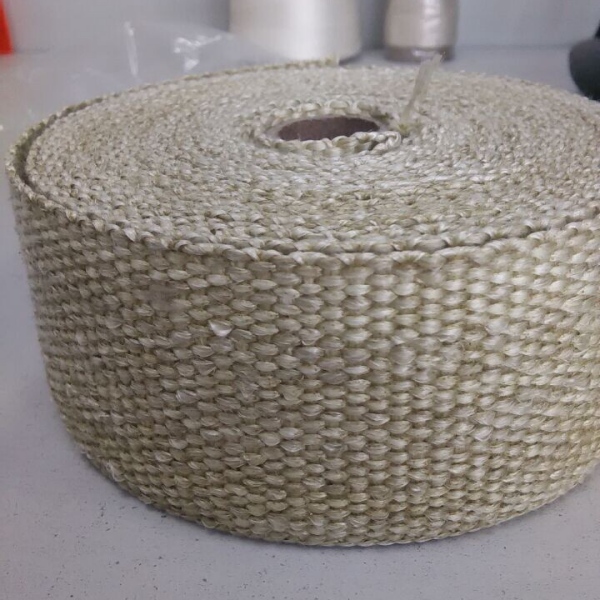
Quick Answer: Which High Temperature Tape Should You Choose?
Start with fiberglass when the verified fiberglass construction meets the temperature and mechanical duty. It is widely used for general industrial wrapping, lagging and equipment insulation.
Evaluate silica when the application needs a high-temperature woven glass textile beyond the practical range of the selected conventional fiberglass tape, while retaining a flexible woven construction for wrapping and fabrication.
Evaluate ceramic fiber tape when the application requires a ceramic textile construction for severe heat, thermal sealing or gasketing, and when the reinforcement and handling characteristics are suitable for the assembly.
No material is automatically best for every furnace, boiler, hose, cable or expansion joint. The comparison must use the exact finished tape rather than a generic fiber name.
Ceramic Fiber Tape vs Silica Tape vs Fiberglass Tape
| Selection Factor | Fiberglass Tape | Silica Tape | Ceramic Fiber Tape |
|---|---|---|---|
| Base material | Conventional glass-fiber yarn | High-silica glass-fiber yarn | Ceramic fiber yarn with a specified reinforcement system |
| Typical selection position | General industrial insulation where the confirmed fiberglass limit is sufficient | Higher-temperature woven insulation and wrapping | Severe heat, thermal sealing and high-temperature gasket applications |
| Reinforcement | Usually the glass yarn forms the tape itself | Normally woven from high-silica yarn; confirm any additional reinforcement | May use fiberglass filament, stainless steel wire or another confirmed reinforcement |
| Handling | Flexible and widely available in woven forms | Flexible woven construction; edge structure should be specified | Flexible textile, but reinforcement, organic processing content and hot-service condition require review |
| Common industrial role | Pipe lagging, wrapping, equipment insulation and general thermal support | High-temperature wrapping, hot-face protection and fabrication | Furnace, kiln and boiler seals, gaskets and severe-temperature insulation |
| Main item to verify | Finished-tape service limit and suitability of the weave | Silica content, woven or slit structure, shrinkage and service conditions | Classification versus continuous limit, reinforcement and condition after heating |
This table is a selection framework, not a universal temperature chart. Actual temperature, dimensions and performance must come from the technical data for the product being quoted.
What Is Ceramic Fiber Tape?
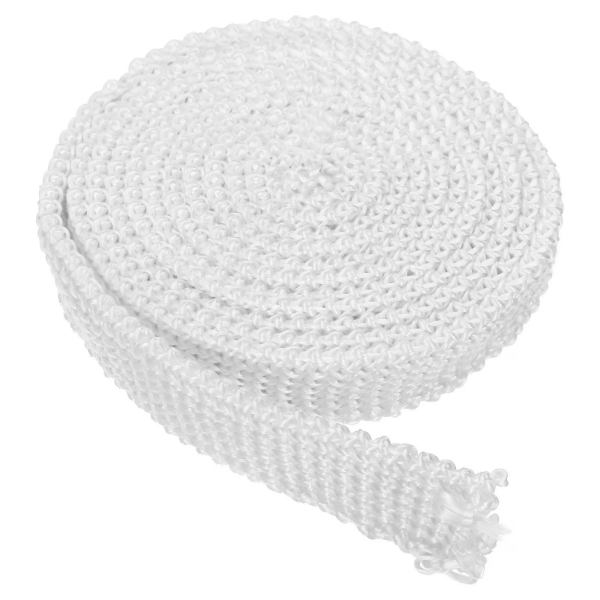
Ceramic fiber tape is a narrow woven textile produced from ceramic fiber yarn. The yarn normally includes reinforcement to support textile manufacturing and provide mechanical integrity.
A ceramic fiber insulation tape can be used for wrapping, thermal sealing and gasket applications where the confirmed fiberglass or silica construction does not meet the required duty. The terms ceramic woven tape and ceramic webbing tape are also used in industrial purchasing.
The ceramic fiber remains the primary thermal material. Fiberglass filament or stainless steel wire reinforcement does not turn the product into fiberglass tape or metal tape.
How Does Ceramic Fiber Tape Work?
Ceramic fiber yarn creates a flexible textile layer that can reduce heat transfer, fill a designed thermal joint or protect a component from direct heat exposure. The woven structure allows the material to be supplied in narrow widths for wrapping and sealing.
The tape does not generate cooling and does not make an assembly pressure-tight by itself. Its performance depends on material thickness, contact, compression, coverage, surrounding insulation and the temperature at the tape location.
Where the tape is used as a high temperature gasket, the equipment design must define the required contact, compression and leakage criteria.
Ceramic Fiber Tape Temperature Rating: What Does the Number Mean?
A ceramic fiber tape temperature rating can refer to several different values:
- fiber classification temperature;
- continuous service temperature of the finished tape;
- long-term temperature of a specific reinforcement;
- short-duration or intermittent temperature;
- peak temperature under a stated test;
- raw-material softening or melting behavior.
These values are not interchangeable.
Ceramic fiber tape working temperature
The ceramic fiber tape working temperature should describe the recommended service condition for the complete construction. It must account for the ceramic yarn, reinforcement, organic processing content and mechanical duty.
Ceramic fiber tape maximum temperature
A published ceramic fiber tape maximum temperature may represent classification or short exposure rather than continuous operation. Ask the supplier to identify the definition and test condition.
Ceramic fiber tape peak temperature
The ceramic fiber tape peak temperature should include an allowable duration and frequency. A tape that survives a brief high-temperature event may not retain the flexibility or tensile integrity required for repeated operation.
Ceramic fiber tape intermittent temperature
The ceramic fiber tape intermittent temperature is relevant where equipment has startup peaks, batch cycles or short furnace-opening events. It should not replace the continuous rating.
What temperature can ceramic fiber tape withstand?
The answer depends on the exact reinforcement and finished construction. Do not use one generic number for every glass-reinforced, wire-reinforced, plain woven or ladder tape.
Ceramic Tape Reinforcement Temperature
Ceramic tape reinforcement temperature can control how well the textile retains useful mechanical strength while hot.
Glass filament reinforcement provides a non-metallic reinforcement option but can limit long-term hot mechanical performance. Stainless steel wire reinforcement may be considered for higher-temperature mechanical duty, subject to alloy, atmosphere and electrical requirements.
The ceramic tape base fabric temperature should therefore not be published independently of the reinforcement when the tape must carry tension, resist repeated movement or remain mechanically stable during operation.
For a detailed reinforcement comparison, review Ceramic Fiber Tape Reinforcement: Fiberglass vs Stainless Steel Wire.
Ceramic Fiber Tape vs Silica Tape
The key distinction in ceramic fiber tape vs silica tape is the fiber family and construction.
Silica tape is woven from silica-rich glass yarn. Ceramic tape is produced from ceramic fiber yarn with a reinforcement system. Both can serve demanding thermal applications, but their handling, reinforcement, shrinkage, post-exposure condition and service limits can differ.
For ceramic vs silica tape for industrial use, evaluate:
- continuous temperature at the tape location;
- peak exposure and duration;
- reinforcement and hot mechanical strength;
- required flexibility before and after heating;
- fiber shrinkage and dimensional change;
- contact with process chemicals or moisture;
- availability of widths, thicknesses and technical evidence;
- whether the application uses wrapping, compression or fabrication.
Silica may be preferred where a woven high-silica construction provides the required temperature capability and handling. Ceramic fiber tape may be preferred where a reinforced ceramic textile is specified for a severe thermal seal or gasket. The final decision should be based on the exact product, not the words “extreme temperature.”
Ceramic Fiber Tape vs Fiberglass Tape
In ceramic fiber tape vs fiberglass tape, conventional fiberglass is usually the more economical and widely available starting point when it meets the verified conditions.
For ceramic vs fiberglass tape for industrial use, move to ceramic only when the application requires a capability the selected fiberglass tape cannot provide. That requirement may involve temperature, hot strength, thermal cycling or a specific equipment specification.
Do not replace fiberglass with ceramic simply to obtain a larger headline temperature number. Consider installation, fiber handling, reinforcement, cost and the required condition after heat exposure.
Ceramic vs Silica Tape: Handling and Dimensional Stability
Ceramic vs silica tape selection should include handling, not only heat resistance.
Silica tape is normally supplied as a woven glass-derived textile. Ceramic tape can include ceramic fiber, reinforcement and organic processing constituents. Ask for the safety data and any first-heating instructions for the selected ceramic construction.
Ceramic fiber tape dimensional stability and ceramic fiber tape thermal cycling should be evaluated where the joint repeatedly heats and cools. Record changes in thickness, contact, flexibility and position after the agreed cycle.
Where shrinkage is critical, request a product-specific test result. Do not infer the ceramic tape shrinkage after heating from another manufacturer, another reinforcement or another ceramic fiber product.
Abrasion, Oil, Chemical and Moisture Exposure
Ceramic fiber tape abrasion resistance depends on the weave, reinforcement, surface condition and contact with nearby hardware. A plain ceramic textile should not be assumed to resist continuous rubbing against a sharp bracket.
Ceramic fiber tape chemical resistance, ceramic fiber tape oil resistance and ceramic fiber tape moisture resistance require the actual fluid, concentration, temperature and exposure duration. General material descriptions are not universal compatibility approvals.
Where abrasion, oil or weather exposure controls the selection, a coated fiberglass product or another construction may be more appropriate than an uncoated ceramic tape.
How to Choose Ceramic Fiber Tape
Use the following process when deciding how to choose ceramic fiber tape:
- Confirm that conventional fiberglass and silica alternatives do not already meet the duty more efficiently.
- Define continuous, peak and direct-flame exposure separately.
- Select the reinforcement required for hot mechanical performance.
- Choose plain woven, ladder or another structure around the installation.
- Specify width, thickness, roll length and installed condition.
- Review handling, first-heating and post-cycle requirements.
- Approve a representative sample before repeat supply.
How to Specify Ceramic Fiber Tape
For an RFQ describing how to specify ceramic fiber tape, include:
| RFQ Field | Information Required |
|---|---|
| Application | Wrapping, thermal seal, gasket, fabricated component or equipment joint |
| Fiber construction | Ceramic fiber type and any product-specific composition requirement |
| Reinforcement | Fiberglass filament, stainless steel wire or another confirmed structure |
| Temperature | Continuous, intermittent, peak, duration and direct-flame exposure |
| Dimensions | Width, thickness, roll or cut length and tolerances |
| Installation | Overlap, compression, fixing, movement and maintenance cycle |
| Environment | Air, steam, oil, chemicals, moisture, vibration and abrasion |
| Approval | Sample, drawing, test reports, SDS, packaging and repeat-order controls |
How to Install Ceramic Fiber Tape
The correct method for how to install ceramic fiber tape depends on whether it is wrapped, compressed or retained by hardware.
For wrapping, define overlap, number of passes and mechanical fixing. For a gasket, define installed thickness, compression and joint closure. For a bolted assembly, evaluate a ladder construction rather than cutting repeated holes into plain tape.
Do not use a universal overlap or compression percentage without product and equipment approval. The installation should be recorded in the drawing or work instruction.
How to Use Ceramic Fiber Tape in Industrial Equipment
The following applications can be evaluated when technical requirements support the construction:
Ceramic fiber tape for furnace insulation
Ceramic fiber tape for furnace insulation can be used as a narrow textile in wrapping, edge and sealing details. The furnace setpoint is not automatically the temperature at every tape location.
Ceramic fiber tape for kiln door sealing
Ceramic fiber tape for kiln door sealing must match the seating width, closing load, reinforcement and maintenance cycle. A flat tape is not automatically equivalent to a shaped rope or tadpole gasket.
Ceramic fiber tape for boiler sealing
Ceramic fiber tape for boiler sealing can be considered for designed thermal joints. Where pressure or gas leakage is controlled, the complete joint requires the corresponding qualification.
Ceramic fiber tape for high temperature gasket applications
Ceramic fiber tape for high temperature gasket applications should be selected around compression, recovery, movement and leakage requirements, not temperature alone.
Ceramic fiber tape for expansion joint fabrication
Ceramic fiber tape for expansion joint fabrication may serve as a local insulation, edge or reinforcement component when the joint design specifies it. It should not be assumed to provide the gas-sealing membrane.
Ceramic fiber tape for thermal curtain fabrication
Ceramic fiber tape for thermal curtain fabrication should be evaluated together with the main fabric, sewing thread, seams, fasteners and handling cycle.
Ceramic fiber tape for cable tray insulation
Ceramic fiber tape for cable tray insulation requires confirmation of the protected cable temperature, electrical clearances, fiber containment and installation access.
Ceramic fiber tape for furnace doors, kiln doors and boiler doors
Ceramic fiber tape for furnace doors, ceramic fiber tape for kiln doors and ceramic fiber tape for boiler doors can have different closure, movement and leakage requirements. Do not use one door-seal specification for every equipment type.
Ceramic fiber tape for duct joints
Ceramic fiber tape for duct joints may provide thermal insulation or a compressible textile element, but it should not be described as gas-tight without testing of the complete joint.
Plain vs Ladder Ceramic Tape
The choice between plain vs ladder ceramic tape depends on the fixing arrangement.
- Plain ceramic fiber tape: continuous woven strip for wrapping, flat sealing and fabrication.
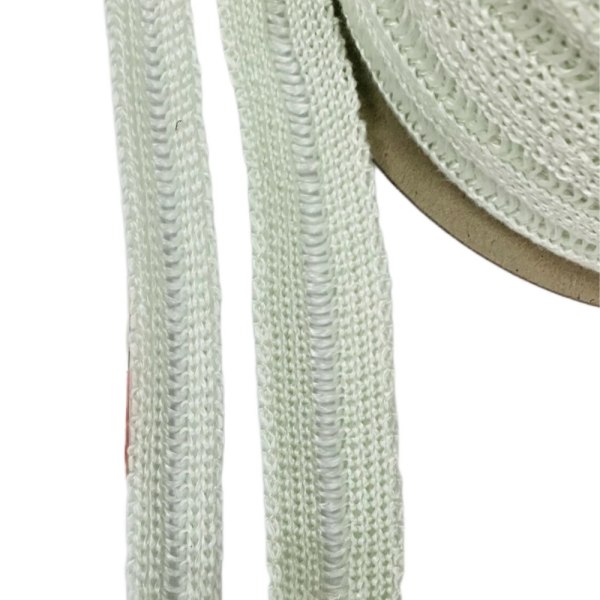
- Ceramic fiber ladder tape: central reduced-yarn zone for a defined bolt or stud line.
For bolted seals, review BSTFLEX Ceramic Fiber Ladder Tape. Do not cut a line of holes through the woven side structure of plain tape unless the design and modified construction are approved.
Is Ceramic Fiber Tape Adhesive?
Standard ceramic fiber woven tape is not automatically adhesive-backed. If a PSA or other backing is required, specify the adhesive chemistry, substrate, application temperature, continuous bond-line temperature and permanent retention method separately.
The ceramic fiber temperature does not become the adhesive temperature.
How to Buy Ceramic Fiber Tape
When deciding how to buy ceramic fiber tape or where to buy ceramic fiber tape, compare more than price per roll.
Request the construction, reinforcement, width, thickness, roll length, temperature definitions, technical documents, MOQ, packaging and sample process. An industrial grade ceramic fiber tape or heavy duty ceramic fiber tape description is not a complete specification unless the performance requirements are defined.
Manufacturer and supplier pages should provide enough information to distinguish fiber classification from continuous service and fiberglass reinforcement from wire reinforcement.
Frequently Asked Questions
Is ceramic fiber tape better than silica tape?
Not universally. Ceramic fiber tape may suit a reinforced severe-temperature seal, while silica tape may suit high-temperature wrapping or fabrication where its woven construction and handling meet the duty.
Is ceramic fiber tape better than fiberglass tape?
Only when the application requires a capability the selected fiberglass tape cannot provide. Fiberglass remains appropriate for many industrial insulation jobs.
Can ceramic fiber tape be used as a pressure gasket?
Not by assumption. A thermal tape is not automatically a pressure-rated or gas-tight gasket. The complete joint must meet the relevant leakage and pressure requirements.
Does stainless steel wire always make ceramic tape better?
No. Wire reinforcement can support higher-temperature mechanical duty in a suitable construction, but it introduces metal, conductivity, alloy and atmosphere considerations.
Can ceramic fiber tape replace ceramic rope?
Not automatically. Flat tape and rope have different profiles, compression behavior and joint fit. Use the geometry specified by the equipment design.
Can ceramic fiber tape be supplied in custom sizes?
Custom width, thickness, length, reinforcement and packaging can be reviewed according to production capability, MOQ and the required construction.
Request Material Selection Support
BSTFLEX supplies fiberglass, silica and ceramic fiber tapes for industrial insulation and sealing. Send the normal and peak temperatures, component or joint dimensions, required construction, reinforcement, quantity and technical-document requirements for review.
Review the BSTFLEX High Temperature Tapes range, or request a ceramic, silica or fiberglass tape selection and quotation.