
Agricultural hydraulic hoses rarely operate in a clean, stationary environment. On tractors, loaders, harvesters and mounted implements, hoses can move through articulation points, run beside steel brackets, collect dust and crop residue, and experience repeated surface contact during long working cycles.
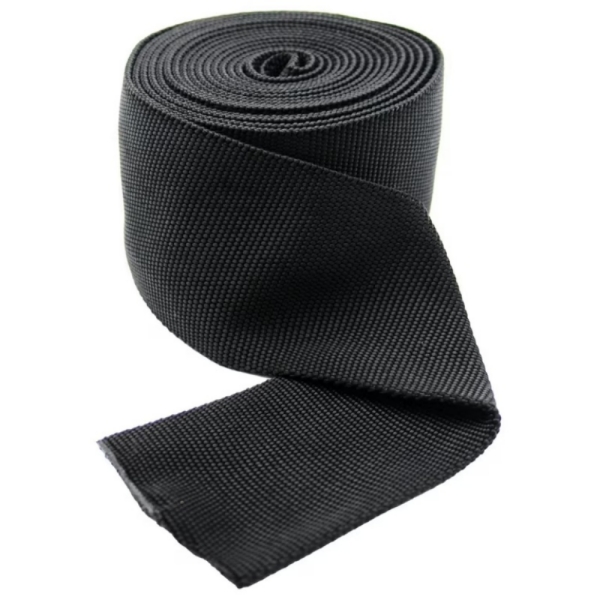
A polypropylene woven hose sleeve is a lightweight textile cover used to reduce direct abrasion and organize hydraulic lines in these mechanical wear zones. For OEM and replacement purchasing, the important questions are where the hose is rubbing, how the sleeve will be installed, what finished size is required and how the material will be supplied to the assembly line or service network.
The BSTFLEX Polypropylene Hose Protective Sleeve is a woven textile option for hydraulic hoses, pneumatic lines, cables and tubing exposed to mechanical wear. This guide focuses specifically on agricultural equipment applications and keeps textile polypropylene sleeving separate from spiral hose guards.
Start with the machine, not with the sleeve catalog. Mark the exact area where the hose contacts another hose, a bracket, frame, guard, clamp or moving structure. Then check whether the contact occurs continuously, only at full steering angle, during implement lift, or under another operating condition.
Typical agricultural wear locations can include loader boom routing, tractor articulation areas, three-point hitch lines, front and rear implement connections, harvester header circuits, hydraulic power packs and auxiliary hose bundles. The same sleeve does not automatically suit every location simply because all of them use hydraulic hose.
Where the routing itself creates an unacceptable sharp edge, pinch point or bend condition, correct that problem before relying on an external sleeve. A woven protector should act as a sacrificial wear layer, not as a substitute for proper hose routing and support.
Use the actual outside diameter of the finished hose. Nominal bore and dash size do not define the external dimension that the protective sleeve must fit around. For a hose bundle, provide the overall bundle profile in the intended routing arrangement.
| RFQ Dimension | What the Buyer Should Provide |
|---|---|
| Hose outside diameter | Actual finished hose OD and, where relevant, its dimensional tolerance. |
| Maximum fitting profile | Largest ferrule, coupling or connector that the tubular sleeve must pass over during installation. |
| Sleeve size reference | Requested inside diameter, lay-flat width or supplier fit range, with the measurement method clearly identified. |
| Protected length | The section that must remain covered after installation, including the locations of clamps, fittings and moving joints. |
| Bundle profile | Overall dimensions and arrangement if several hoses will share one sleeve. |
Do not compare lay-flat width directly with hose outside diameter as though they were the same dimension. Ask for the supplier's recommended fit range for the quoted construction and validate the selected size on a representative assembly.
A tubular polypropylene textile sleeve normally needs end access. If the hose assembly is sleeved before the fittings are attached, the hose body may determine the main size requirement. If the sleeve is installed after assembly, the largest fitting may become the critical pass-through dimension.
Discuss the installation sequence with the hose assembler. The sleeve must not interfere with crimping, pressure testing, hose identification or final inspection. If a much larger sleeve would be required only to clear the fittings, sample the complete assembly before approving the size.
For already-installed hoses where there is no usable end access, a tubular PP sleeve may not be the best construction. Use the hydraulic hose protection selection page to compare an appropriate removable solution rather than treating a tubular woven sleeve as a wrap-around product.
Agricultural equipment is highly dynamic. A hose can look correctly protected while the machine is parked but contact a frame or neighboring line when the steering, boom, hitch or implement reaches another position.
During an approved first-article or service evaluation, inspect the protected route through the machine's intended movement. Pay particular attention to:
The sleeve should remain over the intended wear zone without creating a new restriction. Maintain the hose manufacturer's required bend radius and the equipment manufacturer's routing and clamping requirements.
A woven polypropylene abrasion sleeve and a validated hydraulic burst-containment system are not the same product category. Abrasion resistance can help reduce external wear, but it does not by itself prove containment of a burst hose or protection against a high-pressure pinhole jet.
For ordinary agricultural abrasion applications, specify the PP textile sleeve around fit, wear resistance, flexibility, installation and environmental exposure. If a project requires burst containment, pinhole-leak protection or personnel fluid-injection protection, request product-specific system test evidence and use the construction validated for that duty.
The sleeve must never be used to conceal or return a damaged hydraulic hose to service. Follow the machine and hose manufacturer's inspection and replacement requirements.
Polypropylene is selected in many industrial applications because of its useful moisture and chemical characteristics, but compatibility must still be reviewed against the actual environment. Agricultural equipment may encounter hydraulic fluids, grease, fertilizers, cleaning products, pesticides, fuels or other substances depending on the machine and process.
For a material review, identify the substance, concentration, temperature, exposure duration and whether contact is occasional splash, repeated contamination or continuous immersion. Do not assume that a general polymer description establishes compatibility with every agricultural chemical.
Outdoor service can also introduce sunlight, temperature cycling, mud and repeated washing. If UV resistance, weathering or a particular environmental test is required, include that requirement in the RFQ and request supporting data for the quoted sleeve construction.
Agricultural OEMs, hydraulic hose shops and replacement-parts distributors may need the same textile sleeve in different supply forms. Discuss the format at the quotation stage rather than assuming that every sleeve is supplied the same way.
| Supply Format | Purchasing Points to Confirm |
|---|---|
| Roll supply | Roll length, continuous-length requirement, any allowed joins, labeling, cutting method and packaging. |
| Pre-cut pieces | Finished length, tolerance, cut-end condition, pieces per pack and part-number identification. |
| OEM assembly kits | Multiple sizes or lengths packed for a specific machine or assembly; confirm feasibility, labels and packing sequence before ordering. |
Roll supply can suit hose shops that cut material locally across many part numbers. Pre-cut pieces can reduce local handling for stable OEM assemblies. Compare quotations on usable material, cutting, identification, packaging and assembly labor—not only on price per meter.
Several black textile sleeves can look almost identical in a warehouse or on an assembly bench. For repeat programs, record the approved size and construction under an agreed part number. If printing or special labeling is required, confirm that capability for the exact product before including it in the production specification.
The purchase drawing or specification should identify at least the material, sleeve size reference, finished length or roll format, color, packaging and revision level. If a supplier changes yarn construction, textile structure or another controlled feature, establish whether a new sample approval is required.
A useful sample approval should answer more than “does it fit over the hose?” Check the complete assembly and record:
If the equipment has several hydraulic circuits with different hose sizes, do not assume that one sleeve size can be used everywhere. Standardizing part numbers can reduce complexity, but only after each intended assembly has been checked.
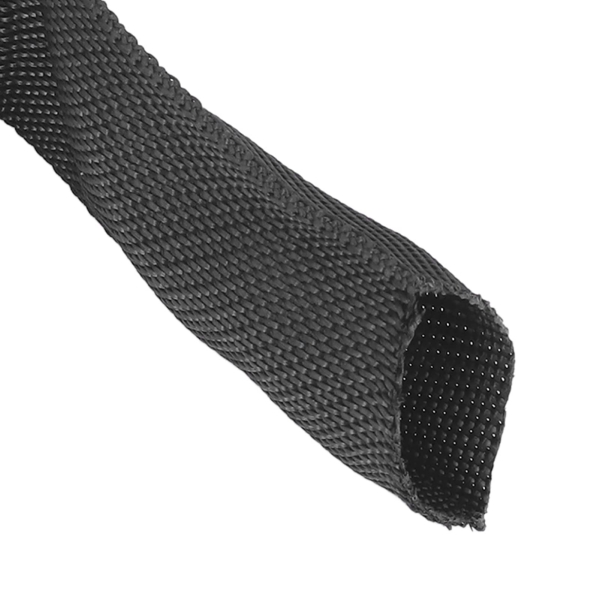
No. This product is a textile tubular sleeve. A spiral guard uses a wound plastic profile and has a different installation method, structure and purchasing specification. Keep the two product groups separate when selecting or quoting hose protection.
It can be considered for suitable bundles, but measure the complete bundle profile and confirm that the grouping is appropriate for movement and maintenance. One outer sleeve does not provide separation between individual hoses inside the bundle.
Provide the hose OD, fitting size, protected length, machine type, routing photograph or drawing, wear location, operating movement, expected fluids or chemicals, quantity and preferred supply format.
Do not assume that from the material or abrasion function. Fluid-injection and burst-containment duties require separate product-specific system testing under defined conditions.
For the BSTFLEX Polypropylene Hose Protective Sleeve, send the hose outside diameter, maximum fitting profile, required protected length, machine or equipment type, wear conditions and preferred roll or pre-cut supply format.
Include sample quantity, production quantity, color, identification, packaging and any required test documentation. BSTFLEX can review custom dimensions and production requirements through its OEM and custom manufacturing services.
Contact BSTFLEX with your hydraulic hose drawing, equipment photo or purchasing specification. For other abrasion, retrofit, thermal or mechanical protection needs, review the complete hydraulic hose protection range.

 English
 français
 Deutsch
 русский
 español
 português
 Nederlands
 العربية
 日本語
 한국의
 Türkçe
 Polski
 Tiếng Việt
 slovenský
 Indonesia