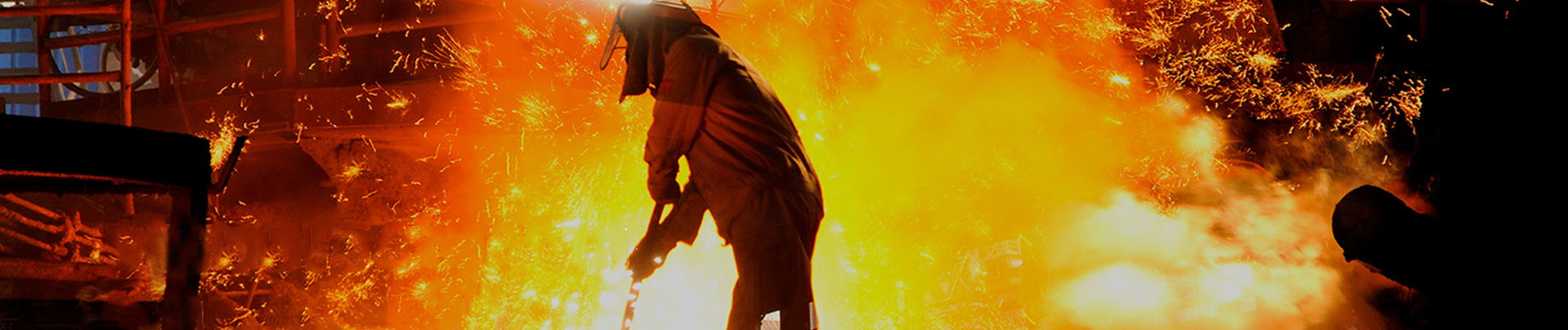
UNgiunto di dilatazione del tessutoSi tratta di un raccordo flessibile installato nelle canalizzazioni industriali per assorbire i movimenti tra le sezioni delle apparecchiature o delle canalizzazioni. Invece di imporre dilatazioni termiche, vibrazioni o cambiamenti di allineamento alle rigide strutture in acciaio, la sezione flessibile si deforma al variare del movimento del sistema.
I giunti di dilatazione in tessuto sono comunemente utilizzati nei sistemi che trasportano aria calda, gas di scarico, fumi di combustione e altri fluidi gassosi di processo. Il loro elemento flessibile può essere costituito da tessuti tecnici intrecciati, tessuti spalmati, membrane di tenuta ai gas, strati di rinforzo e isolamento termico selezionati in base alle effettive condizioni operative.
Poiché l'elemento flessibile non è metallico, questo tipo di giunto è anche ampiamente indicato comegiunto di dilatazione non metallicoOgiunto di dilatazione in tessuto non metallico.
Per progetti industriali personalizzati, vedere ilGiunto di dilatazione in tessuto non metallico BSTFLEX.
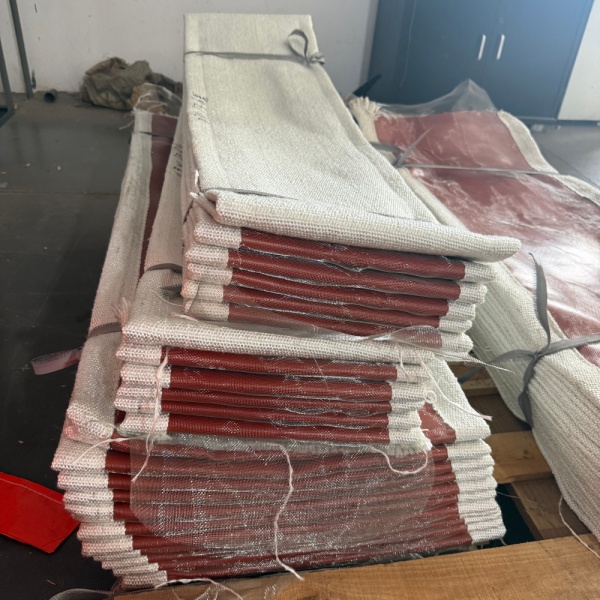
Un giunto di dilatazione in tessuto è una sezione flessibile appositamente progettata e posizionata tra due parti relativamente rigide di un sistema di condotti. Il suo scopo è quello di consentire un movimento controllato mantenendo al contempo il collegamento necessario tra tali sezioni.
I condotti industriali raramente mantengono le loro dimensioni invariate durante il funzionamento. Quando una fornace, una caldaia, un sistema di scarico o un condotto di processo si riscaldano, la struttura metallica circostante si espande. Quando si raffredda, si contrae nuovamente. Anche le ventole e le apparecchiature rotanti possono generare vibrazioni, mentre le tolleranze di installazione possono creare piccoli disallineamenti tra i componenti adiacenti.
Se questi movimenti vengono trasmessi direttamente attraverso condotti rigidi, possono creare carichi aggiuntivi su:
La giunzione in tessuto crea una zona flessibile in cui parte di quel movimento può avvenire senza che l'intera struttura del condotto debba comportarsi come un assemblaggio rigido.
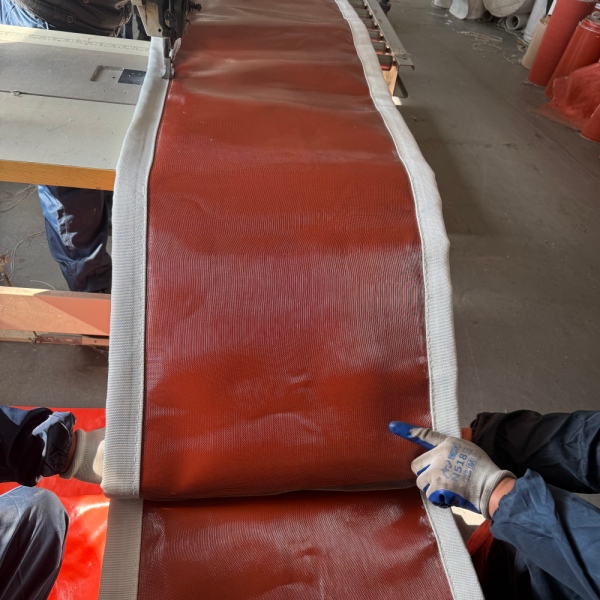
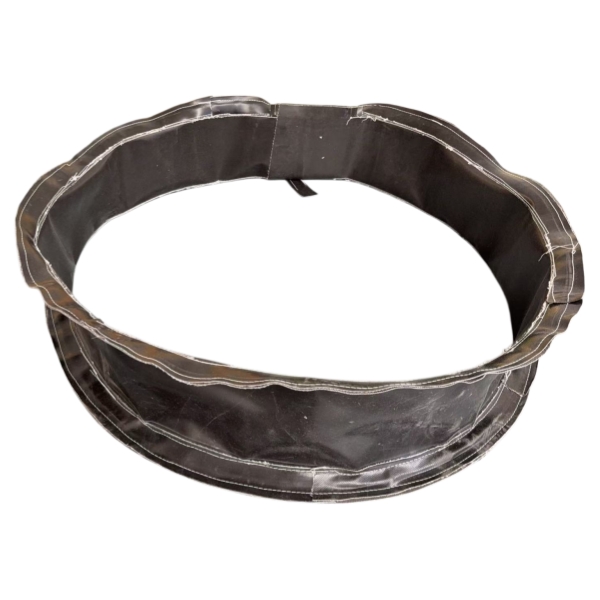
Il terminegiunto di dilatazione non metallicodescrive l'elemento flessibile piuttosto che ogni singolo componente dell'assemblaggio completo.
Attorno al giunto possono ancora essere utilizzati telai metallici, barre di serraggio, rivestimenti o altri componenti. Tuttavia, la sezione che esegue il movimento flessibile primario è realizzata in tessuto, elastomero, tessuto spalmato, membrana laminata o una combinazione di questi materiali, anziché in un soffietto metallico sagomato.
Questa distinzione è importante perché i giunti di dilatazione in tessuto e in metallo si comportano in modo diverso.
Un soffietto metallico si adatta al movimento flettendo delle volute metalliche sagomate. Un giunto di dilatazione in tessuto sfrutta la flessibilità della sua cinghia tessile o composita per cambiare forma al movimento del condotto.
Per le condotte industriali di grandi dimensioni, soprattutto quelle che trasportano fluidi gassosi a pressione relativamente bassa, questa soluzione costruttiva può offrire una notevole capacità di movimento in uno spazio di installazione compatto.
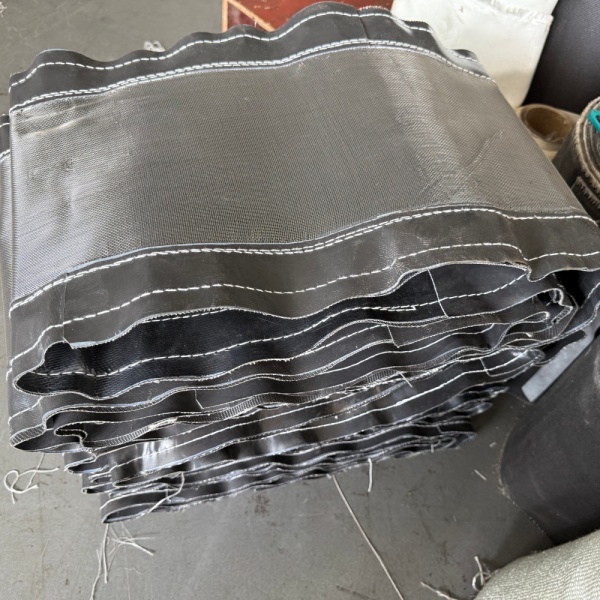
Il principio di funzionamento di base è semplice.
Immaginate due sezioni di condotti per fluidi caldi separate da uno spazio controllato. Un elemento in tessuto flessibile colma questo spazio ed è fissato saldamente lungo il perimetro di ciascuna sezione del condotto.
Quando la canalizzazione si riscalda e si espande, la distanza o l'allineamento tra le due sezioni cambia. Invece di resistere a questo movimento come farebbe un collegamento rigido, la cinghia flessibile cambia forma.
A seconda del design, l'articolazione può rispondere a diversi tipi di movimento.
La compressione assiale si verifica quando la distanza tra le due sezioni del dotto si riduce lungo l'asse centrale.
Questo fenomeno si verifica frequentemente quando la dilatazione termica provoca lo spostamento di una sezione della canalizzazione verso un'altra. La sezione flessibile si comprime o si piega in modo controllato per compensare la riduzione della distanza.
L'estensione assiale è la condizione opposta. La distanza tra le sezioni di collegamento aumenta lungo l'asse longitudinale.
L'elemento in tessuto deve avere una geometria disponibile sufficiente per estendersi senza essere eccessivamente allungato.
Il movimento laterale si verifica quando una connessione del condotto si sposta lateralmente rispetto all'altra.
Ciò è particolarmente importante nei grandi sistemi di canalizzazione, dove il movimento delle apparecchiature, la dilatazione termica in un'altra direzione o la geometria dell'installazione creano uno spostamento anziché una semplice compressione o estensione.
Il movimento angolare si verifica quando le due facce adiacenti non sono più parallele.
La cinghia flessibile si deforma in modo non uniforme lungo il suo perimetro, consentendo a un lato di comprimersi mentre un'altra sezione si estende.
I sistemi industriali reali non si muovono sempre e solo in una direzione. Possono verificarsi spostamenti assiali, laterali e angolari contemporaneamente.
Questo è uno dei motivi per cuigiunto di dilatazione del condotto in tessutoÈ particolarmente utile nelle configurazioni complesse dei condotti. La geometria del giunto può essere progettata in base alla combinazione prevista di movimenti, anziché trattare ogni spostamento in modo indipendente.
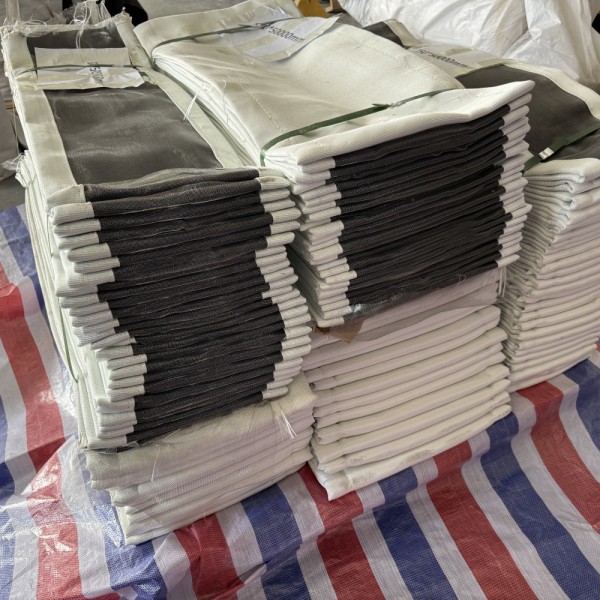
La dilatazione termica è la ragione più nota per l'installazione di un giunto di dilatazione, ma non è l'unica.
Il requisito di movimento completo può derivare da diverse condizioni operative.
| Causa | Cosa succede nel sistema? | Ruolo del giunto di espansione |
|---|---|---|
| Espansione termica | I condotti metallici si dilatano con l'aumento della temperatura. | Consente un movimento dimensionale controllato |
| Contrazione termica | I condotti si contraggono durante lo spegnimento o il raffreddamento. | Allows the system to return toward its cold position |
| Fan Vibration | Mechanical vibration is transferred from rotating equipment | Provides a flexible connection between equipment and ducting |
| Misalignment | Connecting duct faces may not be perfectly aligned | Can accommodate specified offsets within the joint design |
| Structural Movement | Supports or equipment may move relative to each other | Provides a controlled flexible section |
| Operating Cycles | Repeated heating and cooling creates cyclic movement | Accommodates repeated dimensional changes when correctly designed |
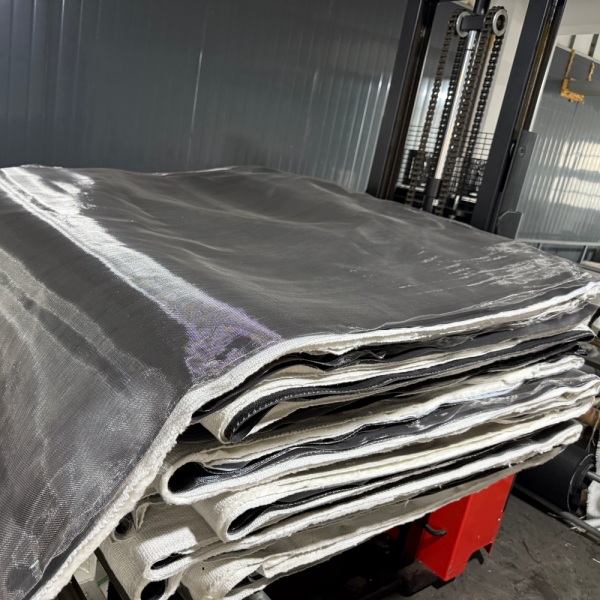
A fabric expansion joint should not be viewed simply as a piece of cloth connecting two ducts.
The flexible section is an engineered material system. Depending on service conditions, it may use a single flexible layer or several different layers, each selected for a specific function.
The outer layer forms part of the flexible envelope and may also provide resistance to weathering, environmental exposure or external mechanical conditions.
This layer helps contain the process gas. Its material must be compatible with the expected temperature, gas composition, moisture and chemical exposure.
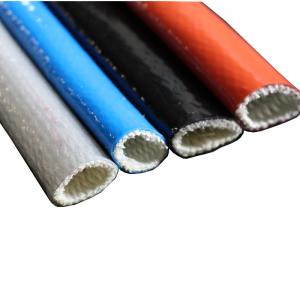
Reinforcement provides mechanical support and dimensional stability to the flexible element. Fiberglass and other technical textile constructions are commonly considered depending on temperature and mechanical requirements.
High gas temperature does not necessarily mean every layer of an expansion joint should be exposed directly to that temperature.
An insulation package can reduce heat transfer from the process side toward temperature-sensitive sealing or outer layers.
Hot gas velocity, ash, dust or abrasive particles can damage an unprotected flexible surface. Some systems therefore require an internal liner, baffle or other protection to shield the joint from direct gas flow and particulate impact.
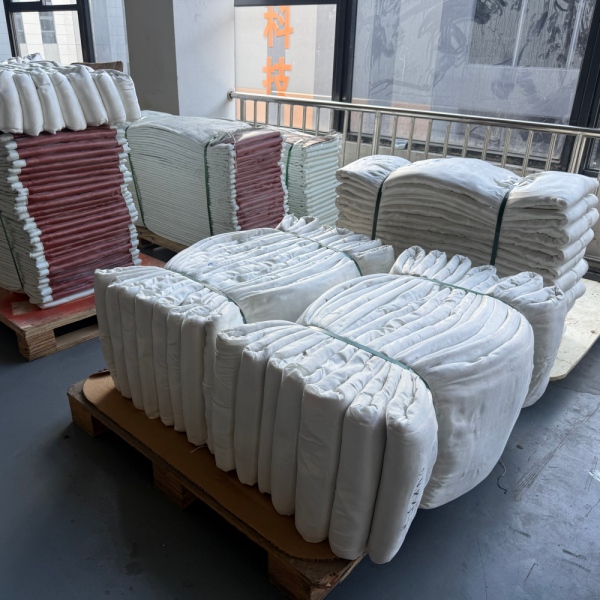
One material rarely provides every property required by a severe industrial application.
For example, a material with excellent temperature resistance may not provide the best gas sealing. A highly flexible sealing material may require reinforcement. A chemically resistant membrane may need insulation to keep its operating temperature within an acceptable range.
As a result, manyfabric expansion jointsuse a combination of materials rather than one fabric performing every function.
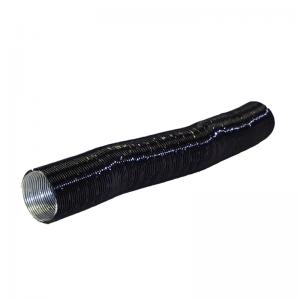
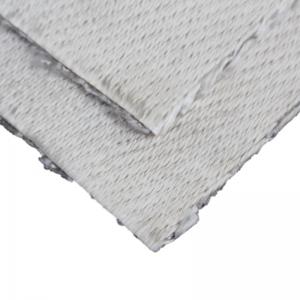
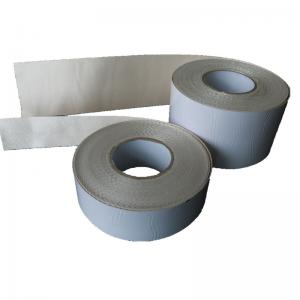
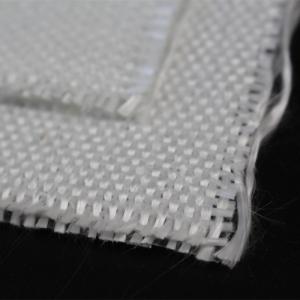
Typical material families include:
BSTFLEX also manufactures a broad range ofhigh temperature fabrics, allowing material construction to be evaluated according to thermal, chemical and mechanical requirements.
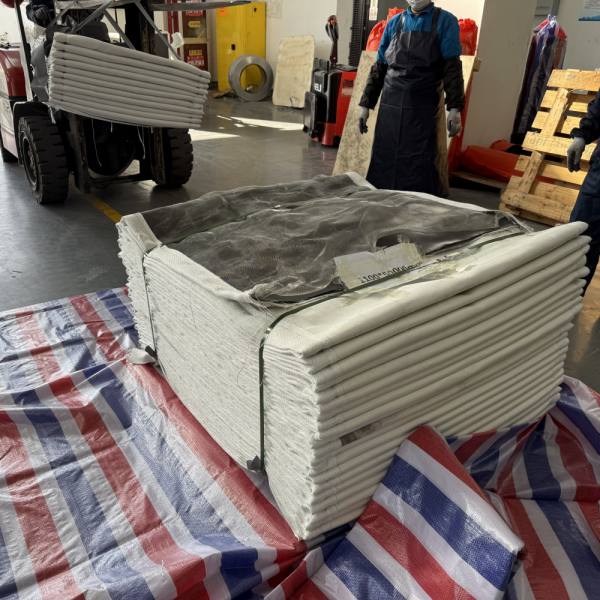
Fabric joints are mainly associated with industrial gas-handling and ducting systems rather than conventional high-pressure liquid piping.
Typical applications include the following.
Boilers, furnaces and combustion equipment can generate hot flue gases that must travel through large duct networks. These ducts experience significant dimensional change between ambient and operating temperatures.
Exhaust ducts connected to engines, industrial furnaces, thermal processing equipment or pollution-control systems may require movement compensation between hot equipment and downstream ducting.
Power plants use large gas-handling systems around boilers, fans, air-handling equipment and emission-control installations. Thermal growth and vibration can occur at multiple connection points.
Cement production combines heat, large duct dimensions, dust and continuous process operation. Flexible expansion sections may be required around kiln-related systems, fans and process ducts.
High-temperature furnaces, hot-air systems and exhaust ducts in steel and metal-processing plants can generate significant thermal movement.
Placing a flexible connection between rotating equipment and rigid ducting can help prevent all equipment movement from being transmitted directly into the surrounding duct structure.
Large ducting systems used with filtration, scrubber, flue-gas treatment and other air-pollution-control equipment often need flexible connections between process components.
Both products are intended to manage movement, but they should not be considered interchangeable simply because they share the term “expansion joint.”
| Characteristic | Fabric Expansion Joint | Metallic Bellows |
|---|---|---|
| Flexible Element | Fabric, coated textile or composite membrane | Formed metal bellows |
| Common Application | Large industrial ducts and gaseous-media systems | Industrial piping and engineered duct or process systems |
| Movement Method | Flexible belt changes geometry | Metal convolutions flex |
| Large Duct Sizes | Well suited to custom large cross-sections | Requires application-specific metallic design |
| Multidirectional Movement | Can accommodate several movement directions in one flexible section | Depends on bellows geometry and assembly design |
| Material System | Can combine several fabric, coating and insulation layers | Primarily determined by metallic alloy and bellows construction |
Pressure, temperature, process medium, movement, duct size and system design must all be considered before deciding which expansion joint technology is appropriate.
A flexible joint can help isolate vibration between connected components because its flexible element does not behave like a completely rigid metal duct section.
This is useful near fans, blowers and other equipment that produces mechanical vibration.
However, vibration should still be treated as an engineering input. Frequency, amplitude, equipment arrangement and joint geometry all influence performance. A fabric expansion joint should not be selected only because a system is described as “vibrating.”
There is no universal movement value that applies to every fabric expansion joint.
Movement capability depends on:
For this reason, axial, lateral and angular movements should be stated separately when specifying a custom expansion joint.
A request such as “50 mm total movement” is less useful than specifying how that movement occurs.
For example:
These values are examples of how movement information can be communicated, not standard ratings for every joint.
There is also no single temperature rating that defines all fabric expansion joints.
The allowable process temperature depends on the complete construction.
A high-temperature joint may be designed so that the process-side protection and insulation reduce the temperature reaching the gas-sealing membrane and external flexible layers.
Temperature selection should therefore consider:
This is why specifying only “high temperature fabric expansion joint” is insufficient for engineering selection.
A manufacturer needs more than the nominal duct dimensions to select a reliable construction.
The most useful project information includes:
| Design Information | Typical Details Required |
|---|---|
| Duct Geometry | Round, rectangular, square or special shape |
| Dimensions | Diameter or width and height |
| Face-to-Face Length | Available installation distance |
| Temperature | Normal and maximum process temperature |
| Pressure | Positive or negative operating and design pressure |
| Process Medium | Hot air, flue gas, exhaust gas or other process gas |
| Axial Movement | Compression and extension |
| Lateral Movement | Required transverse offset |
| Angular Movement | Required angular displacement |
| Chemical Conditions | Acidic, alkaline, moisture or other process exposure |
| Particulate Loading | Dust, ash or abrasive particles |
| Installation Environment | Indoor, outdoor, weather exposure or confined area |
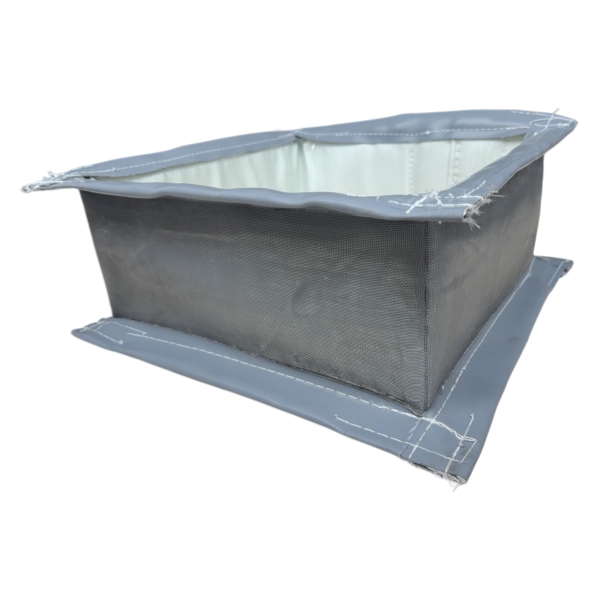
Anon metallic expansion jointshould be considered when an industrial ducting system needs flexibility and the operating conditions are suitable for a fabric-based construction.
Typical reasons include:
The final decision should always be based on actual system conditions rather than the product name alone.
Some basic constructions can be standardized, but industrialfabric expansion jointsare frequently customized.
Two ducts with the same dimensions may require completely different expansion joints if they operate at different temperatures, carry different gases or experience different movements.
Important differences may include:
This is why drawings and operating data are particularly valuable when sourcing replacement or OEM fabric expansion joints.
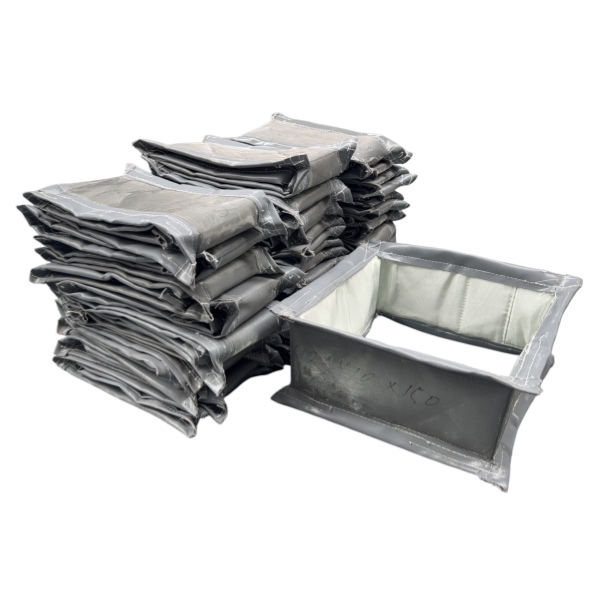
Rectangular joints are widely used on large industrial duct systems. Their corner sections require careful design because the flexible element does not deform identically along straight sides and corners.
Round joints are used on circular ducting, fan connections and exhaust systems. The circumference provides a continuous attachment surface around the duct.
Square configurations are similar in principle to rectangular designs but may be required by specific duct or equipment layouts.
Transitions, non-standard dimensions and application-specific geometries can be manufactured when existing industrial equipment cannot accept a standard shape.
Expansion joint service life depends heavily on correct specification and installation.
Potential failure mechanisms include:
A damaged joint should therefore not automatically be replaced with an identical copy without understanding why the original unit failed.
For replacement projects, operating history can be as valuable as dimensional information.
In industrial ducting, the terms are often used for closely related products. A fabric expansion joint uses a flexible non-metallic fabric or composite element, so it falls within the broader non-metallic expansion joint category. The exact terminology varies by industry and construction.
It provides a flexible connection between sections of industrial ductwork so thermal expansion, contraction, lateral displacement, angular movement, vibration and specified misalignment can be accommodated without making the connection completely rigid.
Typical locations include industrial exhaust ducts, flue-gas systems, furnace and boiler ductwork, fan connections, cement plants, power-generation equipment, steel-processing facilities and air-pollution-control systems.
Yes. Depending on the design, they can accommodate axial compression, axial extension, lateral movement, angular movement and combinations of these movements.
No. Fiberglass is an important reinforcement and high-temperature textile, but complete expansion joints may combine coated fiberglass, PTFE-coated fabric, silicone-coated textiles, silica fabrics, insulation and other materials according to operating conditions.
Sì, quando l'intero sistema di materiali è progettato per la temperatura di processo e le condizioni del gas effettive. Le applicazioni ad alta temperatura spesso richiedono più strati funzionali e un'adeguata protezione tra il flusso di gas caldo e l'elemento di tenuta flessibile.
Non automaticamente. I giunti di dilatazione in tessuto e in metallo presentano caratteristiche diverse in termini di pressione, movimento, temperatura e proprietà meccaniche. Prima di cambiare la tecnologia dei giunti di dilatazione, è necessario valutare le condizioni del sistema.
Tra le informazioni utili figurano la larghezza e l'altezza o il diametro del condotto, la lunghezza da faccia a faccia, le dimensioni della flangia, la disposizione dei bulloni, la forma del giunto e lo spazio di installazione disponibile. Sono inoltre essenziali la temperatura di esercizio, la pressione, il fluido e i requisiti di movimento.
BSTFLEX sviluppagiunti di dilatazione in tessutoPer applicazioni di canalizzazione industriale, aspirazione, aria calda e gas di combustione. La costruzione può essere adattata a geometrie di condotti rotonde, rettangolari, quadrate e non standard, con sistemi di materiali selezionati in base a temperatura, pressione, fluidi di processo, movimento e condizioni di installazione.
Se stai sviluppando un nuovo sistema o sostituendo un giunto esistente, rivedi ilGiunto di dilatazione in tessuto non metallico BSTFLEXPagina del prodotto per visualizzare le opzioni di costruzione e personalizzazione disponibili.
Per la valutazione tecnica, si prega di inviare le dimensioni del condotto, la temperatura normale e massima, la pressione di esercizio, il fluido di processo, il movimento assiale, il movimento laterale, la lunghezza di installazione, la quantità e i disegni disponibili.
Richiedi un preventivo personalizzato per un giunto di dilatazione in tessuto

 English
 français
 Deutsch
 русский
 español
 português
 Nederlands
 العربية
 日本語
日本語 한국의
한국의 Türkçe
 Polski
 Tiếng Việt
 slovenský
 Indonesia